Brakes of the highest quality made in Germany
Fahrwerker is a young brand launched in 2020, which, under the leadership of Jochen Coconcelli, started developing high-quality brakes for LEV vehicles and cargo bikes from Metzingen, Germany.
Former successful mountain biker Jochen Coconcelli worked as head of product development at the German bicycle brake brand Magura until 2019.
The launch of the Fahrwerker brand was made possible in part by Deutsche Post and DHL, which were looking for high-quality brakes for their delivery vehicles and were finding that existing brands weren't suitable.

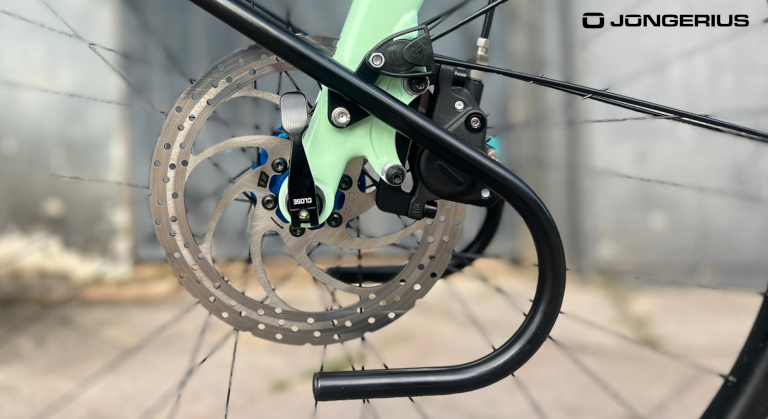
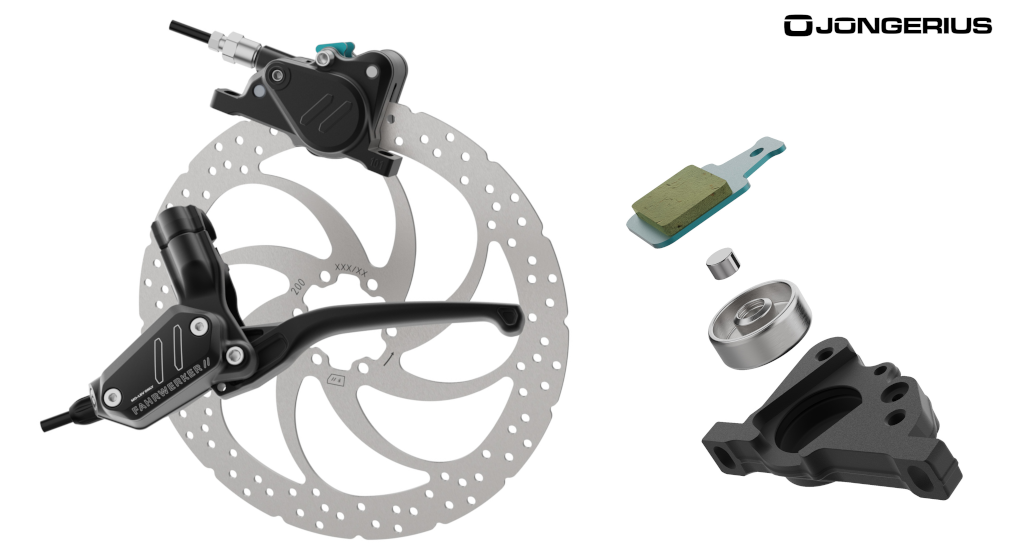
The Fahrwerker F//2000 brake with 2 mm thick brake disc and 20 mm braking surface

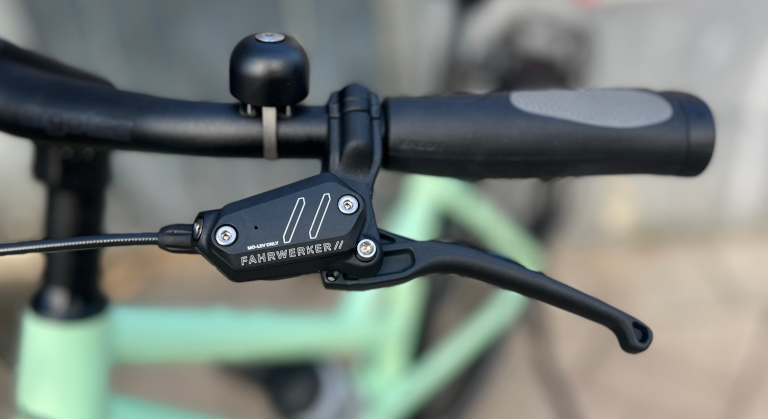
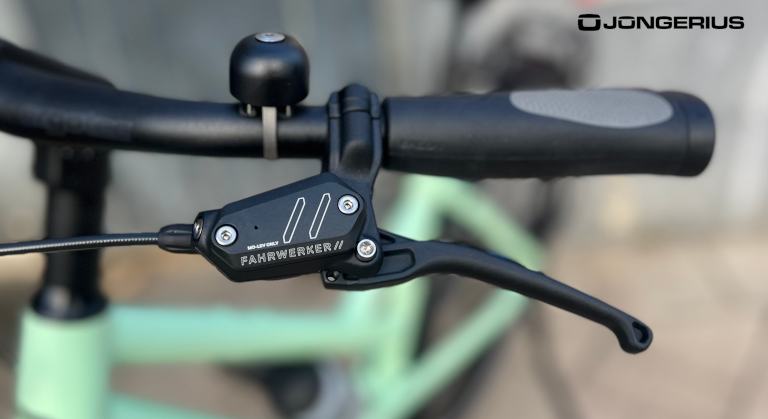
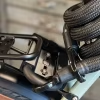
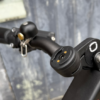
Extra high brake disc, larger brake pistons and long 3-finger brake lever
Fahrwerker F//4000 and Fahrwerker F//2000 brakes
Fahrwerker has launched the F//4000 brakes, with the "4" referring to their design for four-wheeled vehicles. The brakes are characterized by their high braking power and the extremely high quality of this German-made product.
Since 2025, Fahrwerker has also offered the new F//2000 brakes, which are specially designed for two-wheeled vehicles with higher loads. These include cargo bikes, longtails, and touring bikes.
For this reason, we at Jongerius have also started offering the Fahrwerker F//2000 brakes on our Jongerius holiday bikes, e-bikes and extra large XXL bikes.
More surface area of the brake pistons compared to 4 piston brakes
At Fahrwerker they have chosen not to work with a 4-piston brake system but with a more maintenance-friendly, extra-large 2-piston brake caliper.
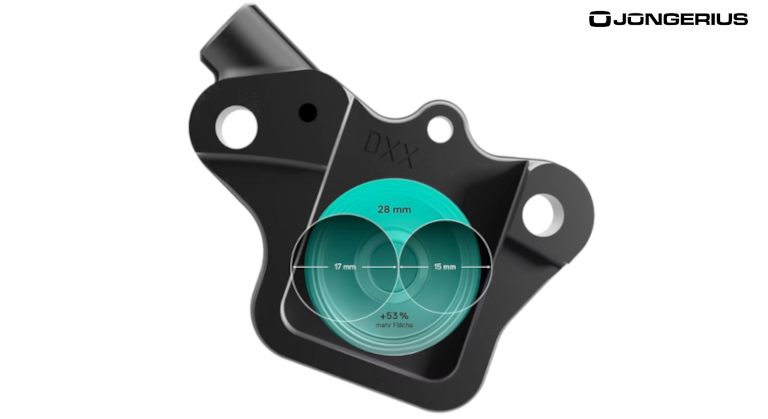
Thanks to the 2 brake pistons with a diameter of no less than 28 mm, the brake pistons have a larger surface area than brakes from other brands with a 4-piston brake system.
The 2 mm thick stainless steel Fahrwerker brake discs, which are available in 180 or 200 mm, have a braking surface of no less than 20 mm high.

Larger brake piston surface than a 4-piston brake system

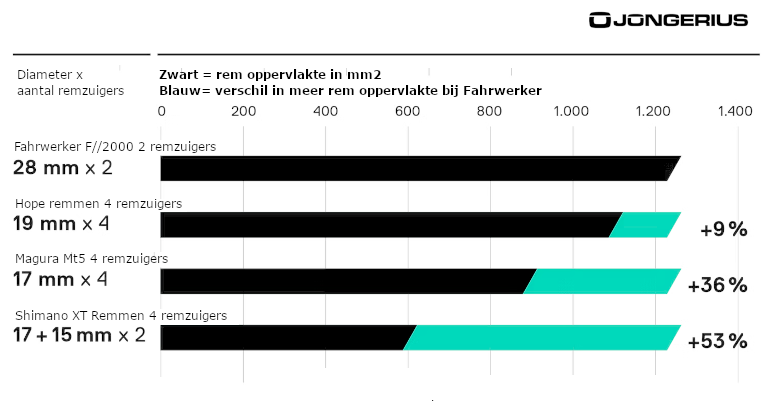
Difference in mm2 between the 28mm 2 piston brakes and other 4 piston brakes.
The differences between Fahrwerker, Magura, Hope and Shimano brakes
The biggest difference between Fahrwerker and Magura or Shimano disc brakes is the longer brake levers for controlled braking and the use of larger brake pistons for more braking power.
For comparison, a Shimano 4-piston brake system has 53% less brake piston surface area (in square millimeters) and a Magura MT5 4-piston brake system has 36% less brake piston surface area (in total) compared to the Fahrwerker F//2000 brake.
Even a Hope brake with 4 brake pistons still has a total of 9% less braking surface than the Fahrwerker disc brakes. You can take a closer look at this in our table.
Where Hope does use brake fluid, Fahrwerker, Shimano and Magura (each with their own) opt for more maintenance-friendly mineral oil in their braking system.
Up to 10,000 km with 1 set of Fahrwerker brake pads
Fahrwerker's extra-large organic brake pads have an average lifespan of 10,000 km at a load of 150 kilos.
This extra long lifespan is due to the material used and because the brake pads are considerably larger and thicker than those of other brands.
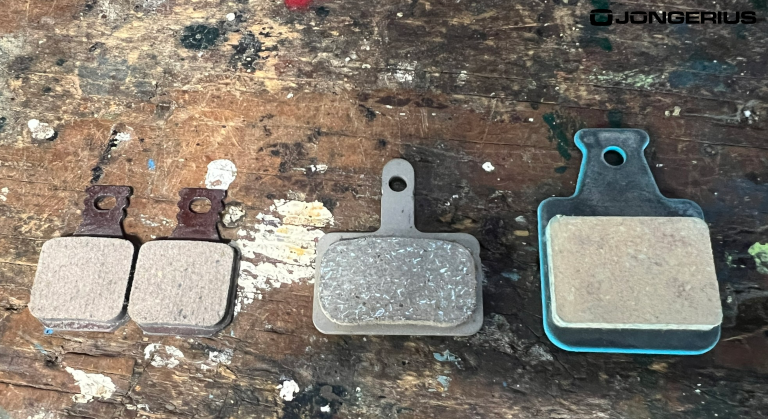
This is clearly visible in the photo; on the left you see a set of Magura MT5 brake pads for double pistons, in the middle Shimano brake pads for single pistons, and on the right the Fahrwerker brake pads for single pistons.

From left to right: Magura MT5, Shimano and Fahrwerker brake pads

Replacing the brake pads is a piece of cake
Easily replace brake pads on the Fahrwerker F2000
Replacing the brake pads is very easy without having to remove the wheel. Simply remove a bolt on the side and lift the brake pads upwards.
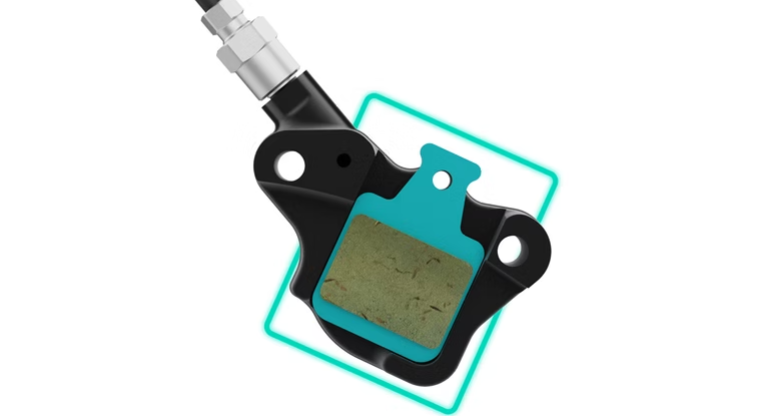
Replacing the new brake pads is very easy thanks to the stopper at the bottom and the magnetic mounting on the stainless steel brake piston.
All you have to do is replace the bolt on the side and the brakes are ready for many more kilometers of cycling fun.
Fahrwerker brake bleeding without tools
Bleeding your hydraulic disc brakes after shortening a brake line doesn't require any complicated tools or oil.
This is due to the SBP Smart Bleed Port developed by Fahrwerker himself.
Turn the brake lever slightly and position it horizontally, then open the Smart Bleed Port half a turn with an Allen key. Apply the brake (allowing the air to escape through the bypass) and, while still pressing the brake, close the SBP Smart Bleed Port.
And your brake is ready for use.
The first test bikes with Fahrwerker F//2000 brakes will be available at our test center from December 2025!


Add comment